an image of EMMELINE B WELLS sitting at a desk writing on a piece of paper

Colloquium Series: Women’s Studies

“I believe in women, especially thinking women.” – Emmeline B. Wells   Valerie Hegstrom, Amy Harris (BYU Department of History), and Connie Lamb (BYU’s Women’s Studies Librarian) will discuss what Women’s Studies has meant to BYU and current research by members of the Women’s Studies Research Group. October 16th at 3:00 in JFSB B099.    

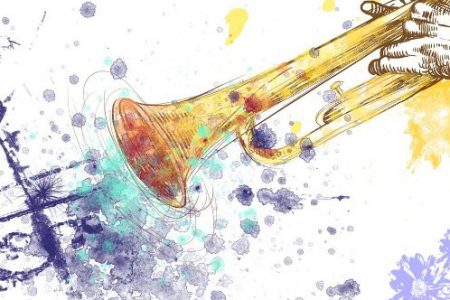
an image of a man playing a trumpet with a cat on it

Jazz and the Art of Civic Life

The Humanities Center and American Studies program welcomes Loren Schoenberg, tenor saxophonist and Executive Director of the National Jazz Museum in Harlem, and Jonathan Batiste, rising jazz star, to BYU for a series of events organized around the theme of “Jazz and the Art of Civic Life.” Emphasizing the relationship of jazz to the subjects of …

an image of a man in a suit and tie smiling

Geoffrey Galt Harpham Lecture

The grand launch of the Center took place on Friday, October 12th, 4:00-6:00, in B002 JFSB. Our speaker was Geoffrey Galt Harpham, Director of the National Humanities Center. Professor Harpham literally wrote the book about the humanities; fittingly, his talk was entitled “Finding Ourselves: The Humanities as a Discipline.” Anybody who has read anything from Professor Harpham’s …

an image of a courtyard with a couple of trees in the middle

Innovation and the Humanities

Innovation, the Oxford English Dictionary tells us, denotes some alteration to an established order “by the introduction of new elements or forms.” But it’s interesting to reflect for a moment on what any “introduction of the new” entails. For instance, it implies a sense of history as well as novelty, of memory as well as imagination: one must be able to retain an image of what has passed if the innovation is to hold its allure. And yet, if innovation is not to remain perpetually mystifying to us, if we are to grasp the process by which “the new” happens, then we must also possess some ability to organize an innovative product or idea into transmissible form and then show ourselves capable of explaining the nature of the transformation. And it always helps, of course, to understand the cultural contexts in which new things may take root.


an image of a group of people looking at a laptop screen

Public Humanities

The BYU Humanities Center is committed to fostering dialog between the University, businesses, organizations, and local and virtual communities; our goal is to extend opportunities for learning while keeping the University in vital contact with the public we serve.