This post was written by Stephen Tuttle, a BYU Humanities Center faculty fellow.
Recently, I’ve been thinking quite a lot about novelty. This is partly because I teach creative writing, and novelty is a central element in most definitions of creativity. Morris Stein’s definition goes like this: “The creative work is a novel work that is accepted as tenable or useful or satisfying by a group in some point in time.”[1] While some researchers argue with Stein’s emphasis on product, saying that creativity has as much to do with thought or process as it does with any resulting “work,” one thing everyone seems to agree on is that creativity involves the pursuit of something new or original.
David Eagleman, a recent guest of the Humanities Center, equates novelty with challenge, saying that the best thing we can do for the long-term benefit of our brains is to engage in activities that keep us somewhere between frustration and achievement. Novelty in this sense describes those things we haven’t yet mastered. And as soon as we do master them, Eagleman tells us, it’s time to move on.
Another reason I’ve been thinking about novelty is because so many of my conversations these days turn toward the threats, promises, and ethics of artificial intelligence. I sometimes comfort myself by saying that large language models are trained on human writing and are therefore only capable of repeating or rearranging what others have already said. AI, I might tell myself, isn’t capable of creating anything genuinely new. I might then lean on Kirby Ferguson, the video essayist, whose “Everything is a Remix” got its fourth and final update a couple of years ago with a new chapter on AI-generated art. Ferguson’s emphatic conclusion is that “AIs will not be dominating creativity because they do not innovate. They synthesize what we already know. AI is derivative by design and inventive by chance.”
But taking a less defensive and more pragmatic approach, I have to ask if what I do as a writer is anything other than rearranging familiar words and phrases. How is my creativity any more novel than that of a chatbot? If I sit down to write a short story, don’t I rely on structures, conventions, and grammars that are as well-worn as an old baseball glove? When I teach students, don’t I encourage them to mimic the patterns they find in the work of so-called masters?
With those questions in mind, I’ve returned to Morris Stein’s definition, looking more closely at how he defines novelty. Stein argues that “the extent to which a work is novel depends on the extent to which it deviates from the traditional or the status quo.” This, of course, requires us to know the tradition and to recognize just how far a work of art has expanded those boundaries. It requires us to make comparisons and to evaluate the relationships between one piece of art and another, one piece of writing and another, one idea and another.
More recently, Emery Schubert has addressed the question of novelty in his “Spreading Activation Model of Creativity.” [2] Schubert argues that novelty is not a categorical on/off switch but an element that can be optimized for effect in a Goldilocks-like fashion. Too little novelty and we find a work derivative, too much and we can’t make sense of it, but between those extremes, we find a spectrum of options. An artist might use new techniques to paint a familiar subject, a photographer might use familiar techniques on unfamiliar subjects, or an architect might alter the way we think about form and function. Whatever the case, when we engage with art, we’re always watching for what’s familiar and what’s unfamiliar, making meaning out of the gap between the two. Can AI do this? I don’t know. But I know that I can use the occasion of AI to remind me that I should.
But perhaps the most important reason I’ve been thinking about novelty is that I’m currently reading Solvej Balle’s novel On the Calculation of Volume. To date, only five of the novel’s seven slim volumes have been published, and only two of those have been translated into English (from Danish by Barbara J. Haveland).
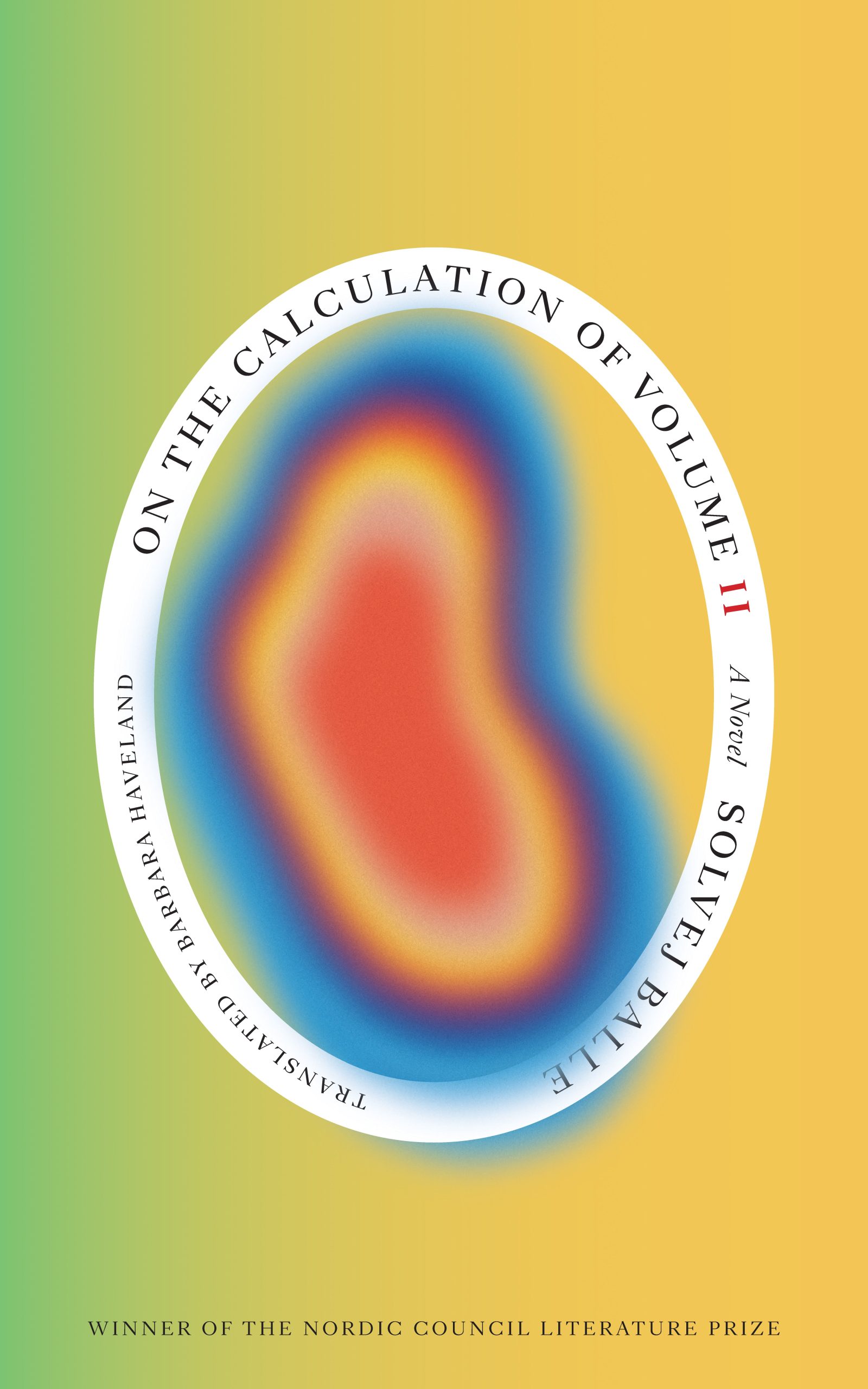
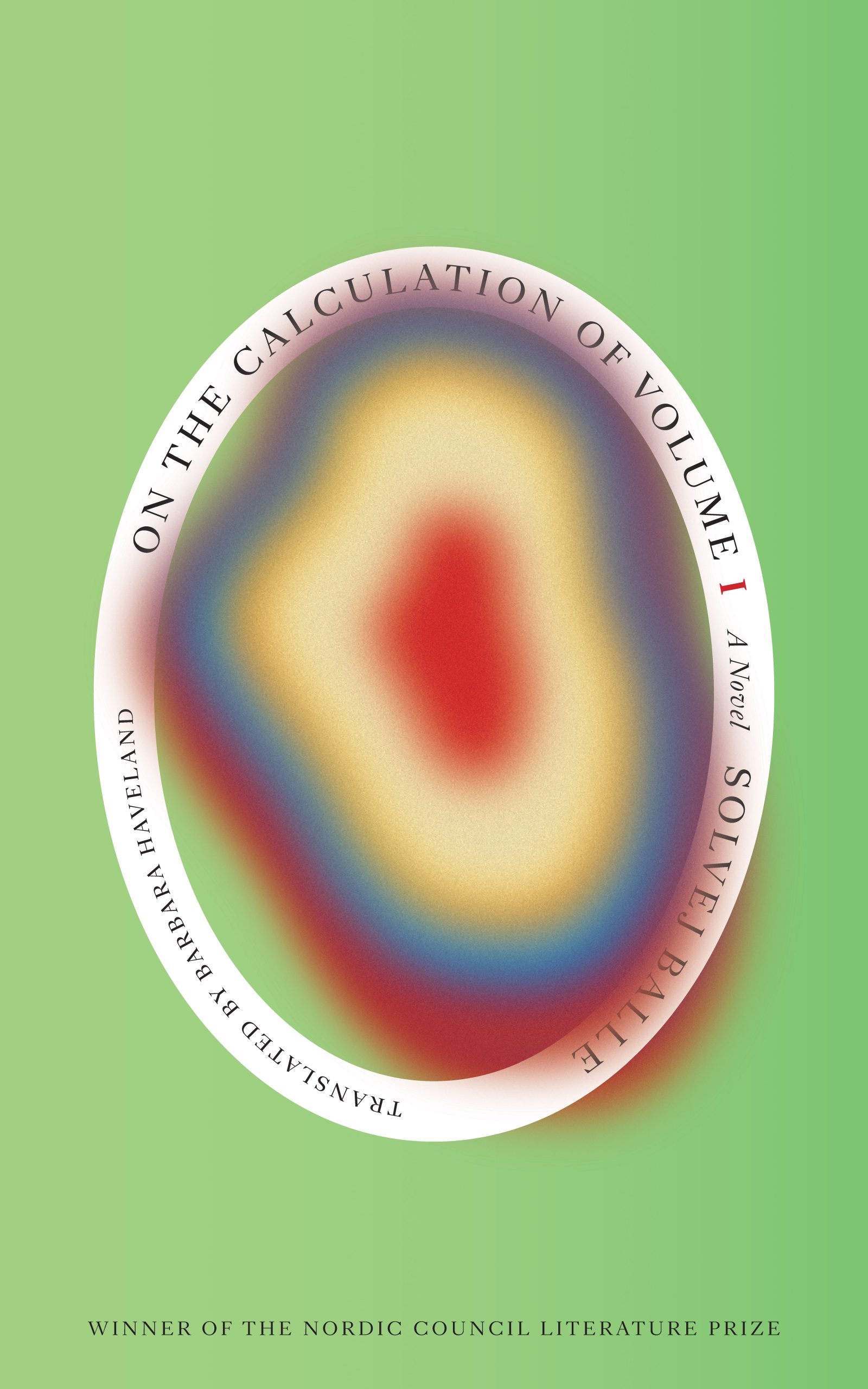
The premise of the novel is one that might sound familiar: a woman is forced to relive the same day (November 18) over and over and over again. She’s stuck in what we now often call a time loop. Maybe you’ve read this story before? Or seen it? Or played it? The number of books, movies, television shows, and video games that make use of this plot device are really too many to name. That overly familiar premise is the starting point from which Balle explores the concerns and preoccupations of Tara Selter, an antiquarian book dealer who has, thus far in my reading, lived through several hundred iterations of her November 18. The novel is unlike Groundhog Day—the movie to which it is most often and most fittingly compared—in several important ways. Immediately, a reader notices that the novel is almost entirely free of jokes (this is not the comedy you might have expected). And Tara Selter, unlike Phil Connors, is bound only in time but not in space. She wakes up every morning wherever she was the night before, meaning that she’s free to move around the world, city to city and country to country, in pursuit of artifacts, memories, and weather conditions that suit her. But perhaps most importantly, what Tara consumes, stays consumed, meaning that when she stays in a place for too long, resources begin to diminish and she becomes, as Philip Oltermann say in his Guardian review, “increasingly concerned about her consumption of resources and her inability to regrow them. What set out as a love story turns into a parable about humanity’s abusive relationship with the natural world.” [3]
What I love about Balle’s novel is the increasing gap between the book I thought it might be and the book it is revealing itself to be. From a premise that seemed to me a little overplayed, I’m discovering something wholly original.
In the classroom, I ask students to submit only original work. By this, I mean that the work should not be plagiarized and should not be produced by AI. But I also frequently paraphrase John Gardner who is said to have said (though apparently he never exactly said) that in all of literature there are only two plots: a stranger rides into town and a man goes on a journey [4]. What we have to grapple with, my students and I, is that originality is not newness in every sense of the word, and neither should it be. There’s a sweet spot for novelty (or a range of sweet spots). The ideas we start with and build upon have been handed down over the centuries, and the language we use to tell our stories is a constantly evolving tool that we don’t need to reinvent every time we sit down to write. Our job is to find innovations, however small, that expand our understanding, taking us one step into the dark, holding onto tradition and deviating from it with just the right balance. Of course, finding that balance is the hard part.
References
[1] Stein, Morris I., “Creativity and Culture,” The Journal of Psychology 36.2, 1953
[2] Schubert E, “Creativity Is Optimal Novelty and Maximal Positive Affect: A New Definition Based on the Spreading Activation Model.” Frontiers in Neuroscience 15, 2021
[3] Oltermann, Philip. “‘How can one day be so voluminous?’: the Danish author who has written her own version of Groundhog Day.” The Guardian. 29 May, 2025.
[4] Though often cited for this idea, what Gardner actually said, in an exercise in The Art of Fiction, was that a beginning writer could choose the subject of “either a trip or the arrival of a stranger (some disruption of order—the usual novel beginning).” (203)