This essay was written by James R. Swensen, a BYU Humanities Center faculty fellow.
In 1989, Saturday Night Live ran a reoccurring bit starring Mike Myers as “Middle-Aged Man,” a bald, bespectacled, fifty-something who was always a little out of fashion. He was also thin-skinned, prickly, and had a funny run. The eponymous character was particularly self-conscious about his weight and repeatedly yelled at others: “you’re looking at my gut, aren’t you!” Which was always followed by: “I’m working on it!” While I laughed at Myers’s character in my teens, now that I’m fully ensconced in middle-age, I don’t know if I find it as humorous; it hits a lot closer to home (and my waistline).
Myers’s character is emblematic of a larger phenomenon; positive representations of middle age can be difficult to find. Indeed, middle-aged men are easy targets. With role models like Homer Simpson or Al Bundy, it’s easy to disparage the working Loman who never seems to get a break. Yet does it need to be this way? In Psalms we are reminded that the righteous “will bring fruit in old age; they shall be fat and flourishing.” [1] Unfortunately, too often we tend to focus on the former, not the latter.
Middle Age is not given a pass in the Church of Jesus Christ of Latter-day Saints. We too have a problem, especially in how we discuss and represent the midmost part of life. We’ve always had a problem. In 1841, Parley Pratt wrote a friend: “next year I pass the narrow strait of middle life, the half way house between life’s opening and its close. I stand as it were on a pinnacle between two worlds, and hardly know to which I belong – perhaps my old acquaintance are as numerous in heaven as on earth, and I hardly know in this division of my affections, to which I am the most attached.” [2] He was thirty-four when he wrote these words. Latter-day Saints, it seems, can be hard on middle age whenever we encounter it. This is not to suggest that middle age is not difficult. It is; we are plagued by illness, disappointment, heartbreak, loss, and a myriad of other challenges. While it is a rough road, happiness can be found along the way. Lehi’s pronouncement that men and women are “that they may have joy,” does not come with a caveat that it need not apply to middle age. [3]
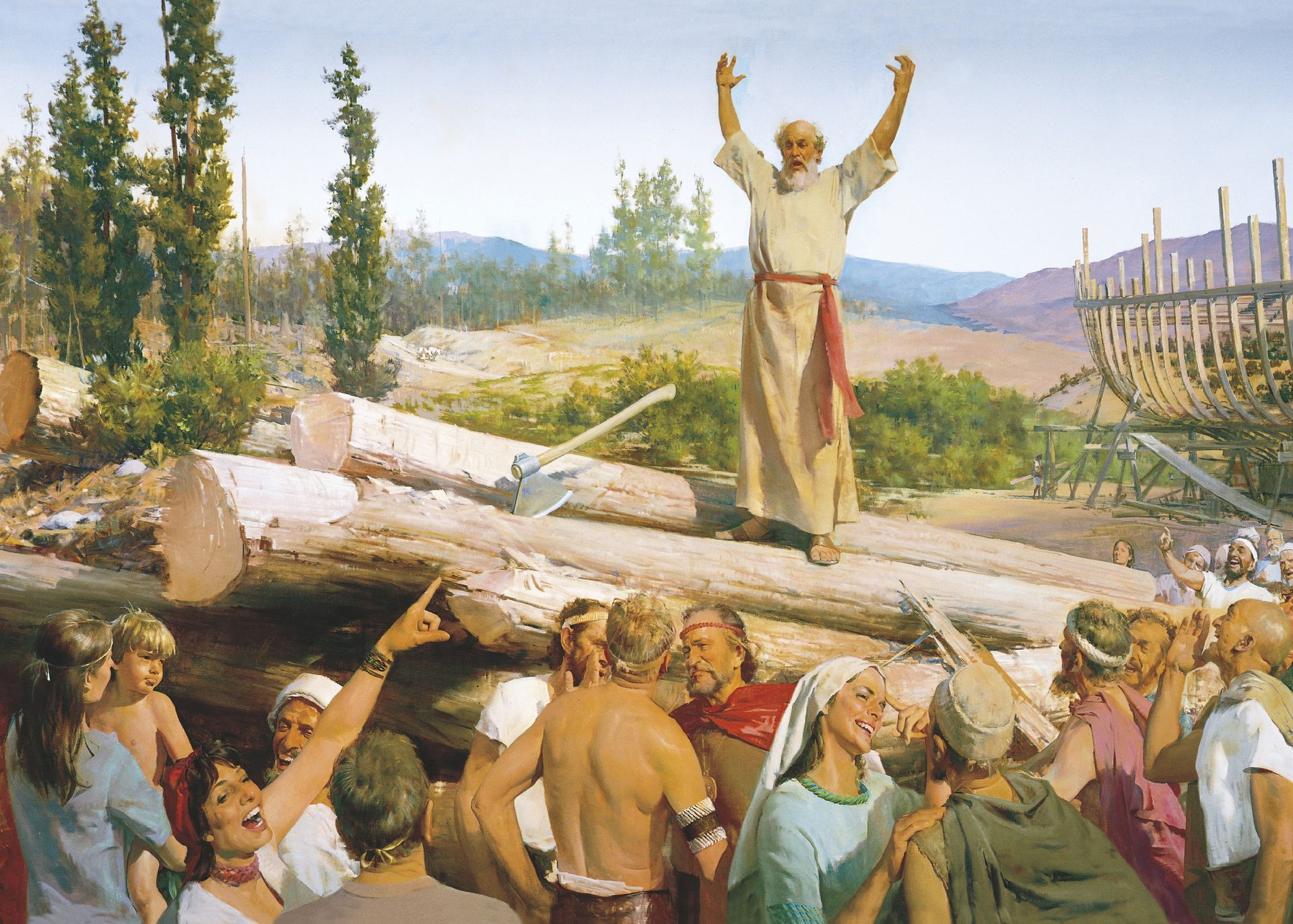
Part of our problem is our visual representation, which has not been kind to middle age. Take, for example, Harry Anderson’s painting Noah Building the Ark (Figure 1). According to Genesis, Noah was around 500 years old at this time. [4] This prompts the question of what middle age looks like if you live as long as Methuselah. Did Antediluvians get a couple hundred years of teenagerhood? (Parents, can you imagine this?! This may explain why there were so many knuckleheads at the time.) Did they have to endure centuries of middle age? Anderson may offer a suggestion, for here we see a middle-aged Noah building his massive boat without being in tip-top shape. Bald and pot-bellied, it is hard to even imagine Noah handling his massive ax with those thin arms. Moreover, he stands in contrast to many in the crowd, who can’t help but mock the old boomer.
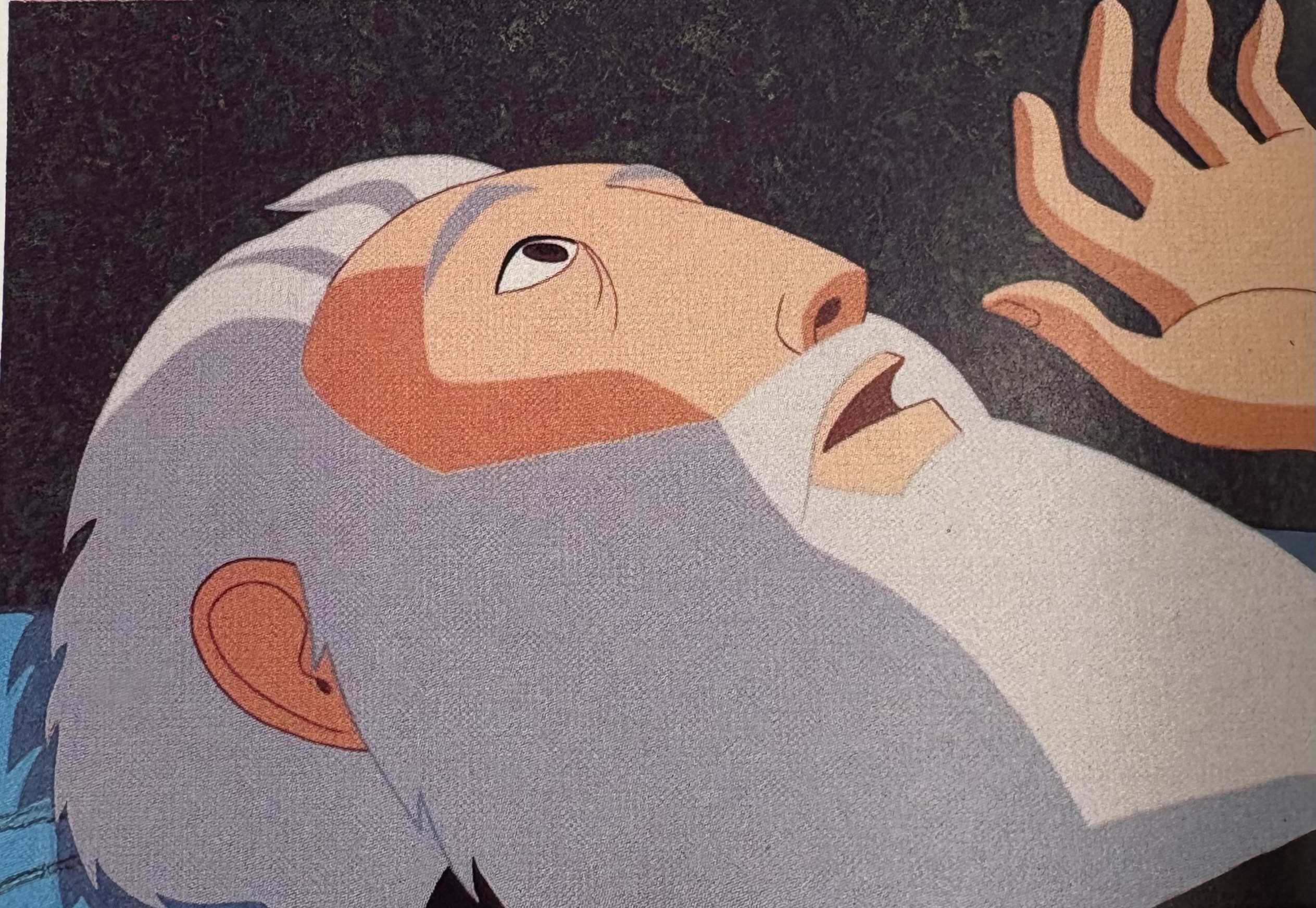
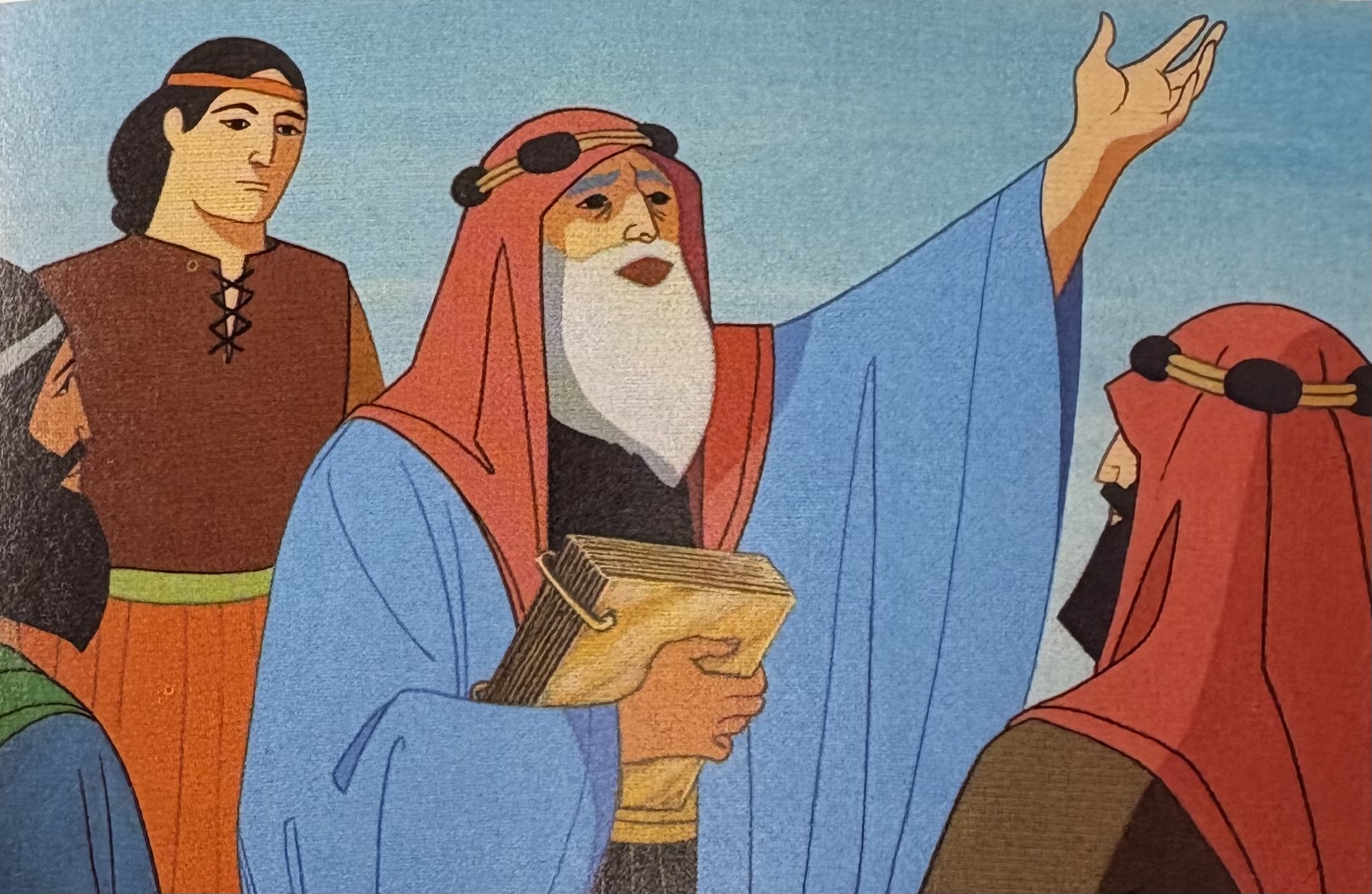
So many of the prophets in our visual tradition look primordial. Arnold Frieberg may be the exception here, especially in his habit of making everyone look Michealangelesque. Yet, he also liked placing old heads on strong bodies. Defiant Abinadi, for example, is sinew and muscle, and dying Mormon is strangely buff. However, most of the ancient prophets I encountered from an early age in our scriptural illustrations were just old. This is especially true of the visual readers that I loved (Figure 2). With their long gray beards and hunched forms, the prophets I saw lived up to being ancient of days (Figure 3). To be fair, we know that they felt the pressure of looking old. Remember that Elisha was so self-conscious of his bald head that he had a bear take out his young scoffers. [5]
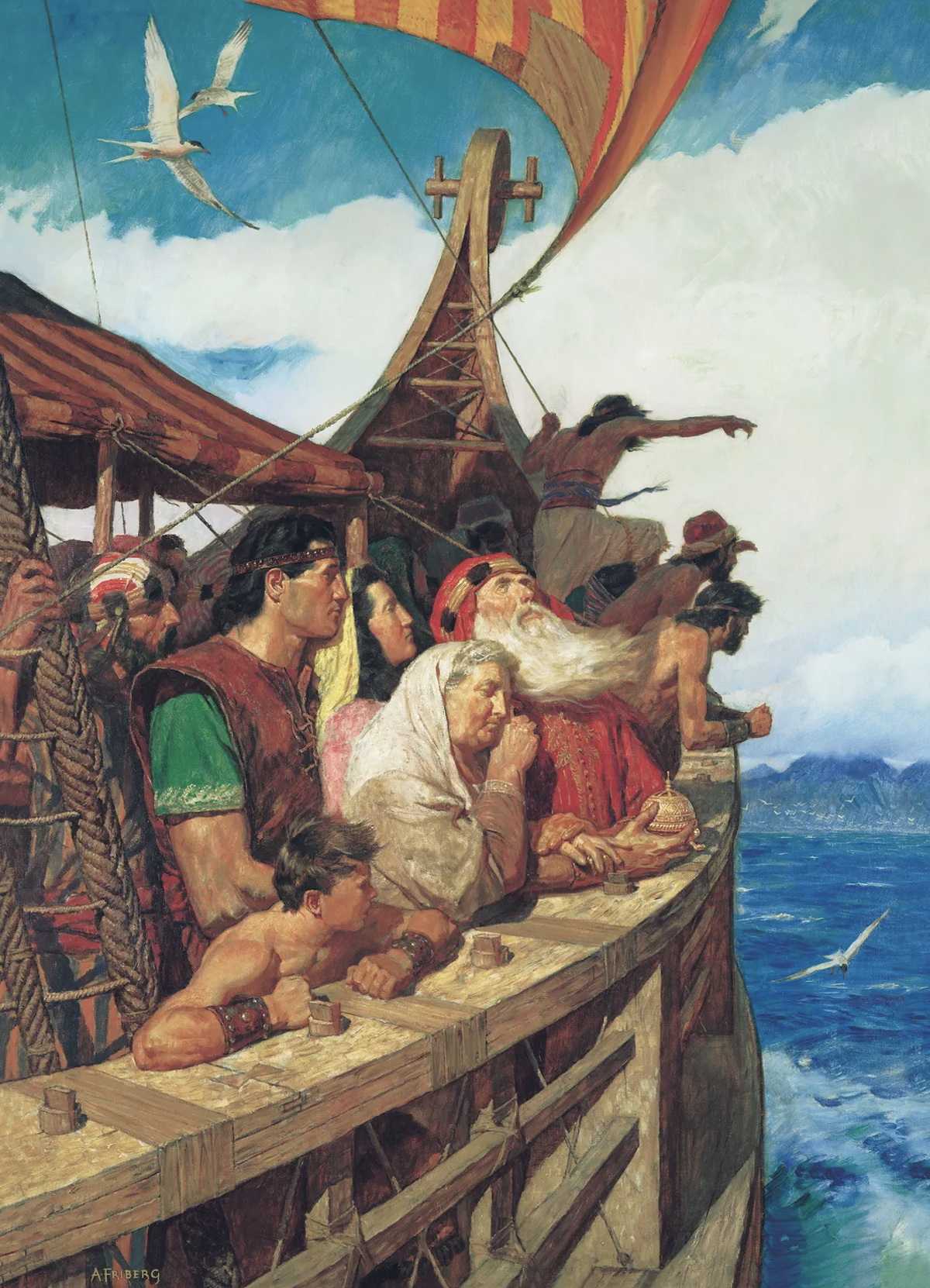
It is important to note that while middle-aged men may be poorly represented in church illustrations and paintings, women appear far less. There are notable exceptions, such as Frieberg’s sympathetic depictions of Sariah. In Lehi and His People Arrive in the Promised Land, she is shown in a rare moment of peace and calm, having endured a long boat ride in which she surely wanted to strangle some of her sons (Figure 4). Yet, such depictions are rare. Like in scripture, it is the men who typically stand at the front of the stage.
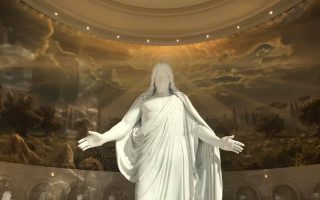
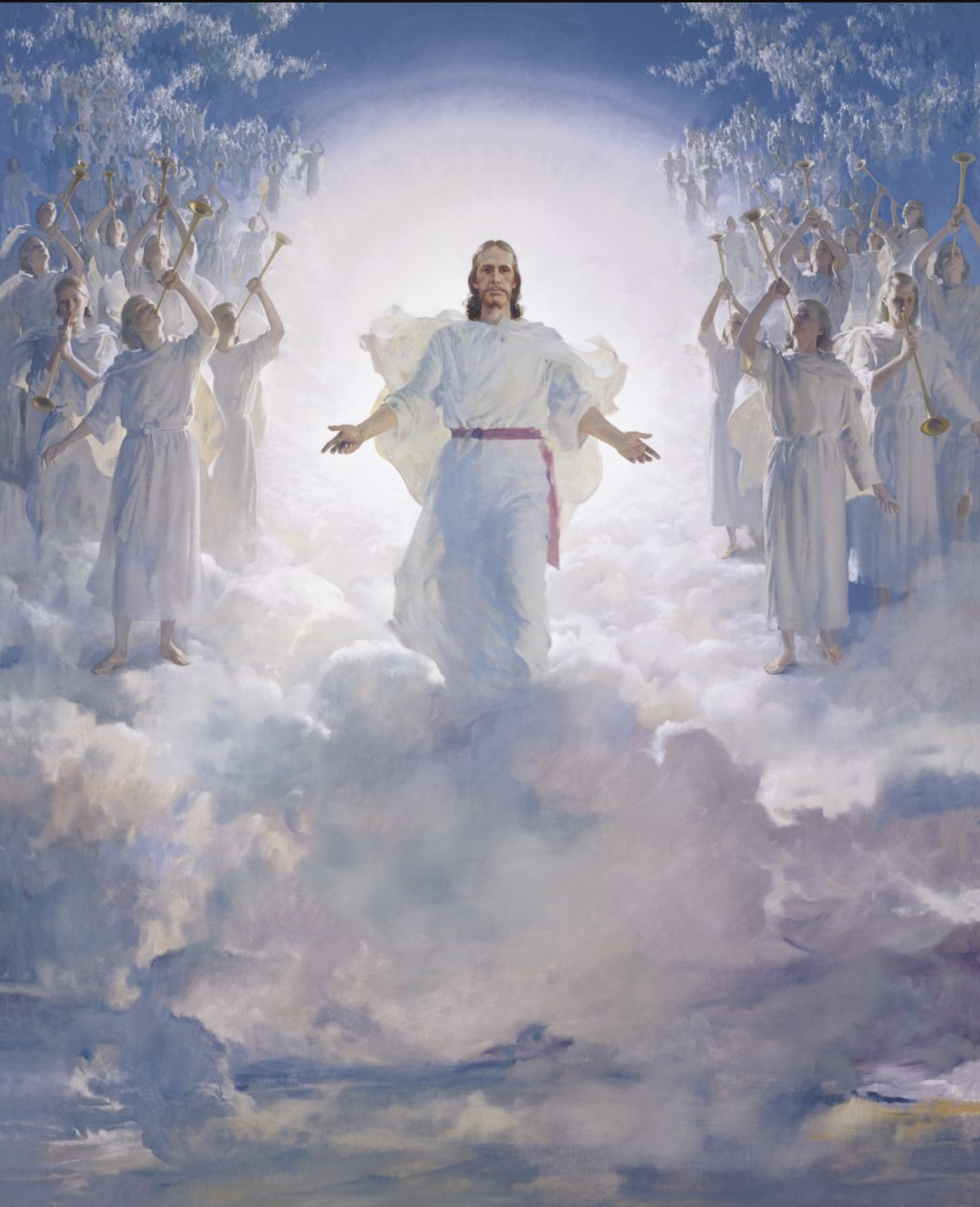
Agedness is not only found in the representation of Old Testament-era prophets. For some reason, Anderson painted a Jesus that looks middle-aged (Figure 5). With thinning hair, he may offer a modern update on the Byzantine Homuncular Jesus, which represented the Christ Child as a miniature middle-aged man, complete with receding hairline (Figure 6). Together these representations grapple with the thorny question of how wisdom and the divine can be manifested in a fallible baby or a still-maturing 33-year-old man. More recent representations in LDS visual culture of the Savior as the “Cool Uncle Jesus,” have largely fixed thinning hairlines, but have created other problems. [6]

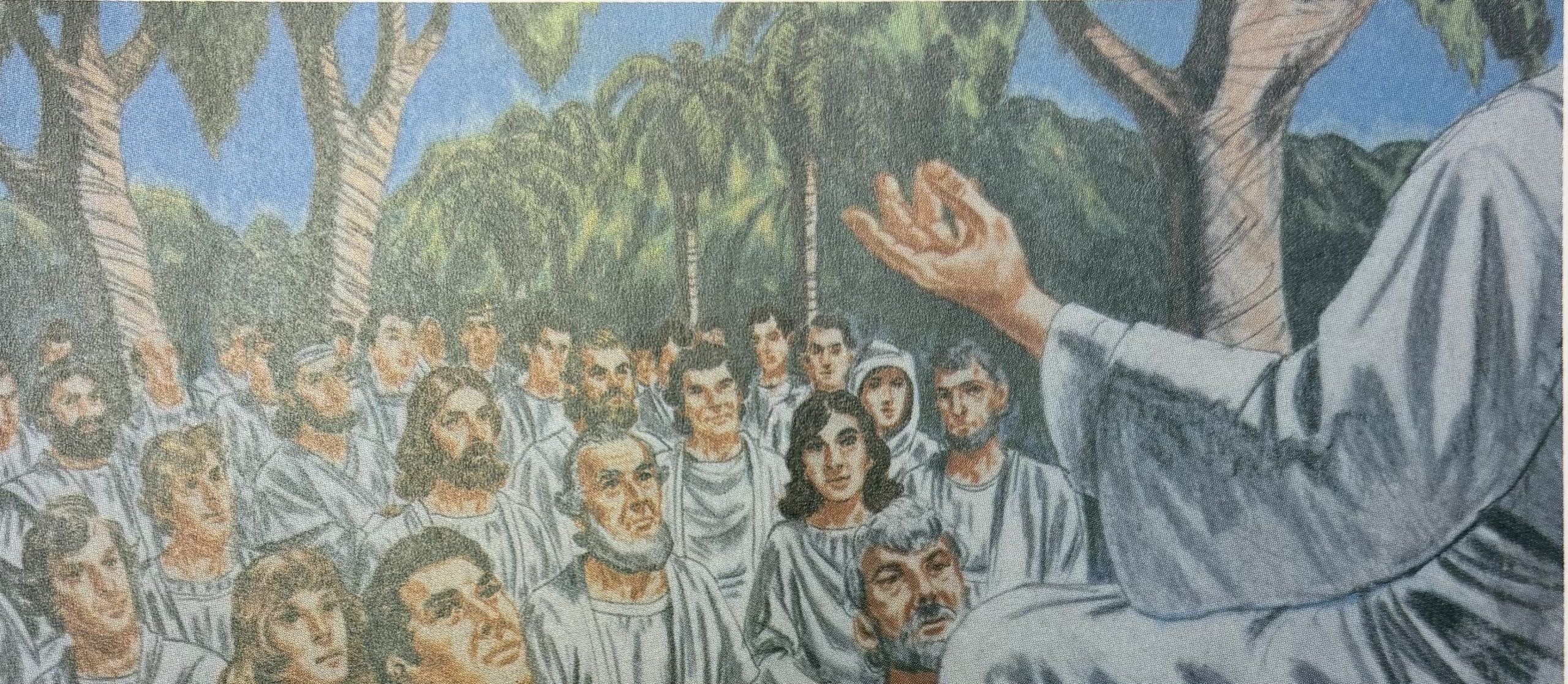
It is, however, in the visual mapping and representation of the Plan of Salvation, where we can most clearly see the challenges in representing life’s third act. Even in illustrations of the pre-existence, we see middle-aged men hanging around (Figure 7). (How can those old guys become babies?) While this may help explain why some come to this earth as “old souls,” it is also problematic for those of us who envision a premortal life of sylvan landscapes and young forms.
The bigger and more pervasive problem, however, is how middle age is represented in the great arc of life—the Plan of Salvation. In 1842, the painter Thomas Cole took on the subject in his successful series The Voyage of Life, which follows a man in a small boat gliding along the river of life in four installments from Youth, Childhood, Manhood, and Old Age. Manhood features the protagonist, around 25 years old, in a dark, dreary, and violent world (Figure 8). He stands on his rudderless boat in prayer as the once-peaceful river he enjoyed has been replaced by a “stormy scene” and “troubled waters” in which rocky crags and a dangerous current loom. [7] “Trouble is characteristic of the period of Manhood,” the artist wrote as an explanation. [8] But the painter does not reveal how his subject survived the tempest and the cataract of life. Rather, he skips to the end with his fourth canvas, in which the now-old protagonist sits upon open waters awaiting a benevolent angel who descends to take him home. We know that he got there but have no idea how he did it. [9]

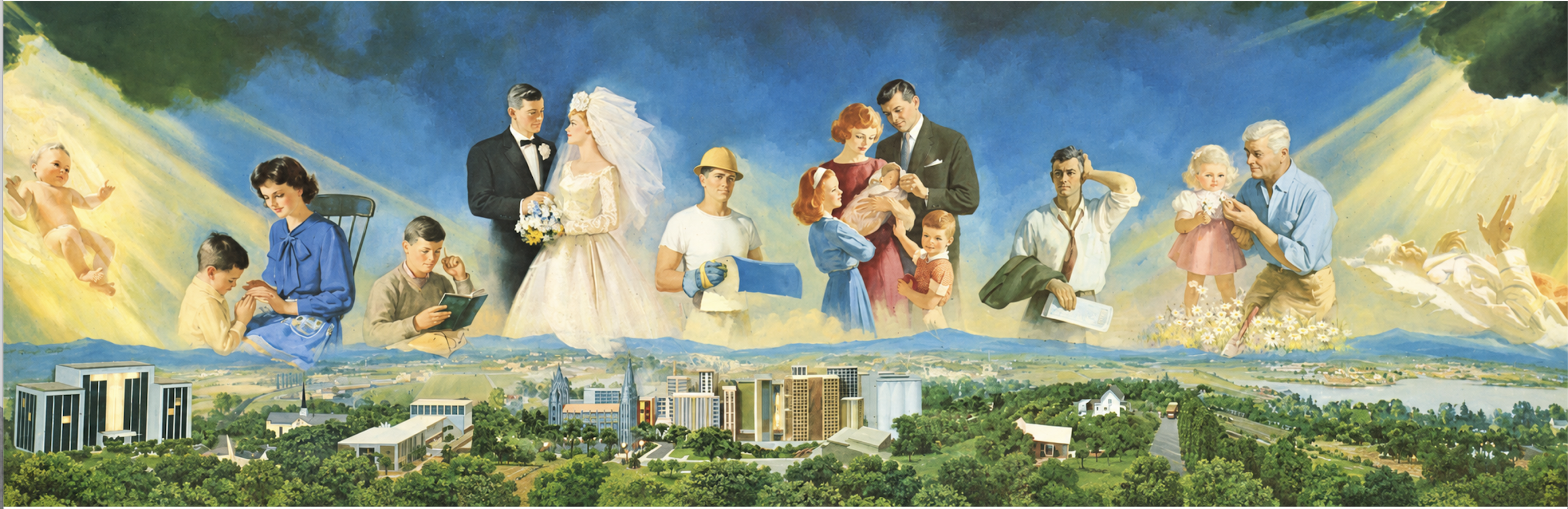
The same, however, is not true of LDS illustrations that do not skip over the casualties of middle age. A classic example of this is illustrator Robert Oliver Skemp’s mural, The Purpose of Life, which appeared in church publications and was displayed in the LDS Church pavilion at the 1964 New York World’s Fair (Figure 9). [10] Middle-aged Man makes his appearance as stage seven with a disheveled tie, his hand pushed against his head in what can only be called a forerunner of the Homeric “D’Oh!” He seems dazed by the pressures of life. Evidently, the quarterly reports he holds in his hands were not as good as he hoped. Moreover, his work is not fulfilling even if it takes place in a modern Miesian-building of glass and steel. In this panorama of life, the anguished individual is proceeded by a snapshot of familial bliss and followed by the joys of being a grandparent. Stuck in the middle, as the label suggests, he represents “adversity.” [11] The accompanying text does not let him off the hook: “Life was not meant to be an unbroken series of happy events. Men are made strong through overcoming obstacles and by resisting evil.” [12]
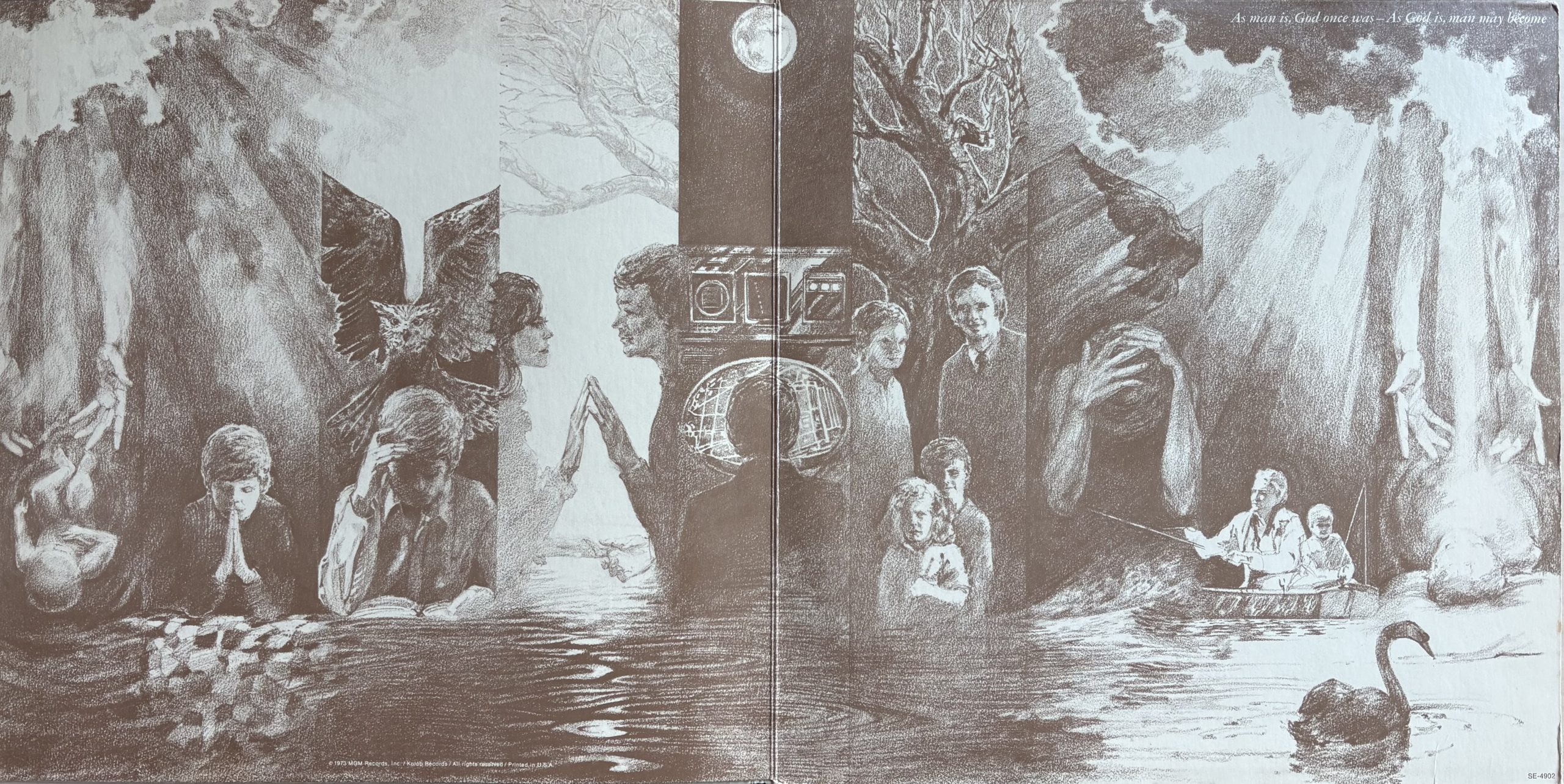
The same treatment of middle age is also found inside of the Osmond’s ambitious 1973 concept album, “The Plan,” which presented the Path of Salvation through twelve songs beginning with “War in Heaven” and concluding with “Goin’ Home.” It was a bold and noble attempt to spread the Gospel through vinyl. The album’s gatefold continued the sweeping theme with a representation of man’s life journey (Figure 10). Credit for the drawing was given to Saul Saget, MGM’s art director, but the style resembles Trevor Southey. Here, middle age is even more direly represented by a man’s downward-cast face, covered by two anguished hands that echo Siqueiros’s wrenching The Sob (1939). The release or unclenching, it seems, will come from fishing in old age with a grandson.
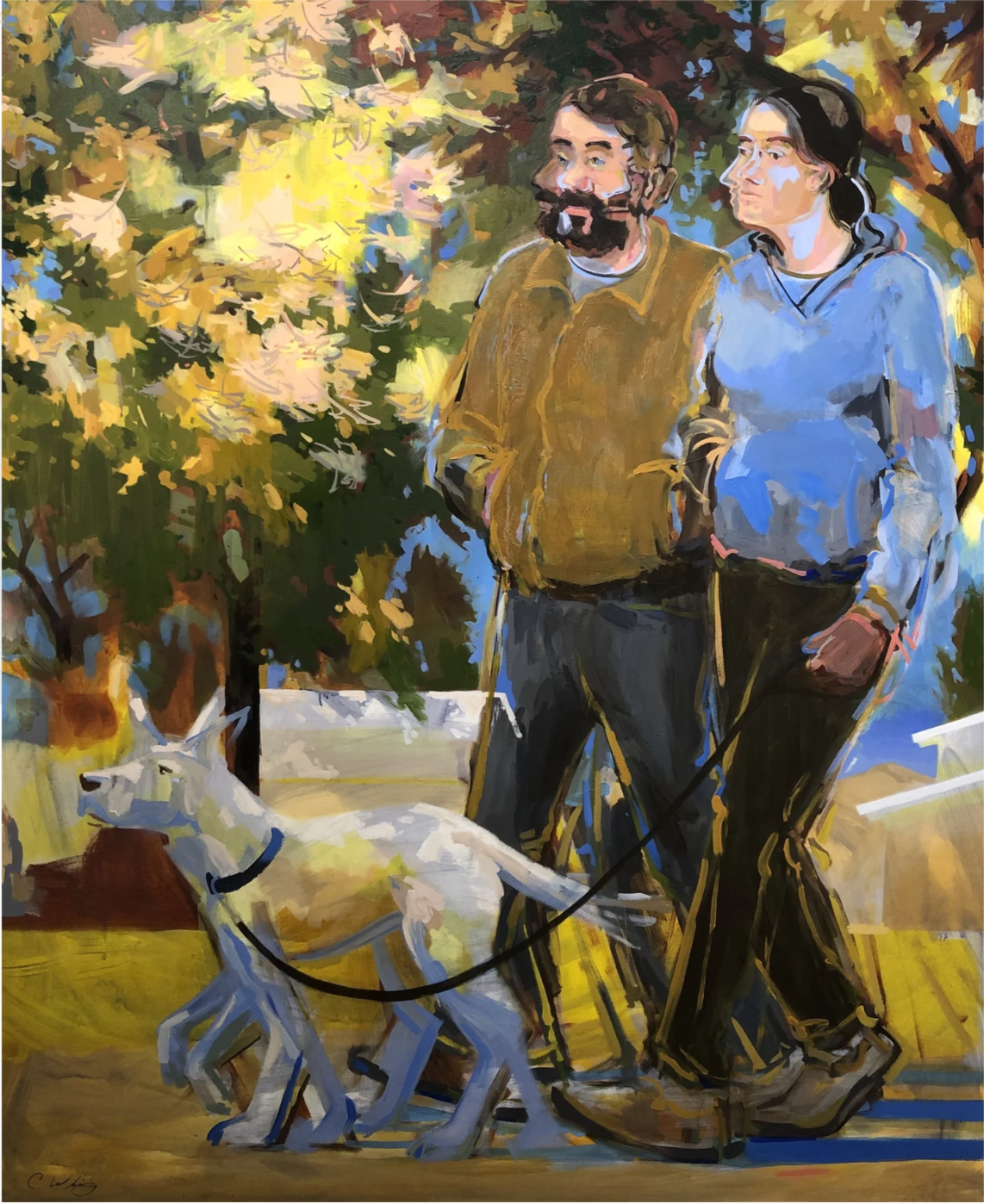
A quarter through a new century, it is time to be kinder to middle age. Yes, it can still be hard and adversarial, but it is important to represent this crucial stage of life in a better, more balanced and more beautiful way. Lows can be balanced by highs; bad by good; pain by health; anguish by joy. Indeed, as we know and read in Lehi’s great sermon, we learn and grow by understanding both sides. Artists like Clint Whiting provide images of happy middle-aged couples engaged in life and striding toward the future (Figure 11). [13] In her paintings and portraits, Pam Beach celebrates community, family, and parenthood—all hallmarks of middle age and virtues that represent the “pinnacle of what we are trying to achieve” in this life. [14] Even in Church illustration, we can see a difference. [15] This is especially true of Bryan Beach’s recent biblical illustrations, which show strong and vibrant individuals (Figure 12). He shows more diversity and a “variety of ages to the prophets so they don’t all just look like super old dudes in every scene.” [16] With a little less gray hair, they are as robust in body as they are in spirit. They are not defeated by age but are who they are because of it. In all, these changes are a necessary reminder of life’s great third act. For in the end, we are that we might have joy, especially in middle age.

References
[1] Psalms 92:14.
[2] “Letter from P. P. Pratt,” Times & Season 3, no. 4 (December 15, 1841): 623.
[3] 2 Nephi 2:25.
[4] Genesis 5:32.
[5] 2 Kings 2:23-25.
[6] See Ehren Clark, “Deepening the Canon: Old Master works lend substance and authenticity to LDS Canon,” 15 Bytes: Utah’s Art Magazine (January 3, 2011). The recent work of church-scholar and artist Anthony Sweat offers a needed counter to this trend showing Jesus as a Jewish man “in first century Roman Judea” of medium height and with “honey or olive colored skin and shorter black hair and beards.” For more see https://www.anthonysweat.com/product-page/jesus-of-nazareth
[7] Franklin Kelly, et. al. American Paintings of the Nineteenth Century, Part 1 (Oxford: Oxford University Press in association with the National Gallery of Art, 1996), 97.
[8] Ibid., 102-103.
[9] The same may be true of the sphinx’s riddle to Oedipus, which covers a lot of ground with two-legged man before he becomes three.
[10] Kemp created a second, similar mural for the Osaka World Expo in 1970. Both murals were placed on permanent display at BYUI in 2022. See https://newsroom.churchofjesuschrist.org/article/worlds-fair-murals-find-home-at-byu%E2%80%93idaho. It also appeared in Doyle L. Green, Meet the Mormons: A Pictorial Introduction to the Church of Jesus Christ of Latter-day Saints and Its People (Salt Lake City: Deseret Book, 1974), 82-83.
[11] Green, 83.
[12] Ibid.
[13] I would like to thank Pamela Beach for her remarkable insights on this topic as well as for her suggestions.
[14] Pam Beach, email correspondence with author, October 19, 2026.
[15] I would also like to point out the Bob Barrett’s Book of Mormon illustrations also tried to avoid stereotypical representations. The same is true of Walter Rane’s paintings of biblical and Book of Mormon subjects.
[16] Bryan Beach, email correspondence with author, October 16, 2026.