The BYU Humanities Center is pleased to announce a new innovative curriculum development workshop intended to expand, strengthen, and give coherence to health humanities curricular offerings in the College of Humanities at Brigham Young University. We invite all faculty in the College of Humanities to apply to participate in the workshop and join us in developing new health humanities courses.
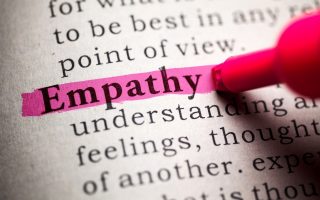
The integration of the humanities into healthcare education has gained national attention as a powerful approach to fostering empathy, critical thinking, and cultural competence in medical professionals. At BYU, health humanities research and teaching is centered on teachings and beliefs received through the restored gospel of Jesus Christ. We believe that the embodied human experience is essential to our eternal purposes, that the body is a “priceless gift,” that “the aging process is also a gift from God, as is death,” and that “we should ever revere the worth of human life, through each of its many stages” (Nelson). Health humanities examines this embodied human experience of health and healing, illness and disability. We have the opportunity to employ our disciplinary expertise to bless humanity as we seek resources that allow us both to endure and celebrate, understand and improve the embodied human experiences of birth, maturation, reproduction, aging, and death.
Health Humanities as a Rapidly Growing Interdisciplinary Field
Between 2000 and 2022 the number of undergraduate health humanities programs in the United States and Canada has grown twelve-fold, to more than 140 programs. The announcement of a new medical school at BYU coincides with our growing interest in developing health humanities courses. BYU has almost 800 undergraduates interested in medicine and preprofessional health every year, but the health humanities is not a field tailored only for health professionals. We all have bodies and people we love with bodies. Our students will be called on to navigate healthcare and illness crises for themselves and their loved ones. They will be members of wards and stakes where they must bear each other’s burdens, mourn with those who mourn, and comfort those who stand in need of comfort. The health humanities are for all of us. Humanities students at BYU can graduate with a powerful skillset that empowers them 1) for the world of work, 2) for citizenship and civic engagement, and 3) for the Christian practice of offering succor to their brothers and sisters.
Eligibility
- College of Humanities CFS-track or adjunct faculty
By participating, you will:
- Prepare a syllabus and course outline related to the rapidly growing interdisciplinary field of the health humanities.
- Join daily interdisciplinary discussions to identify collaborators and find community.
- Learn from visiting scholars and national leaders in the health humanities.
- Receive $1000 in research funding as a catalyst for your work. (Funds may be used for materials, conference travel, or research assistants.)
- Help humanities students answer the question, “What are you going to do with that?” by building tangible career pathways.
- Give pre-med students a competitive advantage through courses that build skills in demand: cultural competence, communicative ability, and comfort with ambiguity.
- Focus on the health humanities in the light of the restored gospel of Jesus Christ by considering how the humanities allow us to succor one another in bearing our burdens, mourning with those who mourn, and comforting those who stand in need of comfort.
Where and when?
- BYU campus, May 4-8, 2026. 9am-4pm each day.
What type of course should I propose?
Propose a departmental course with an existing course number that you intend to develop, improve, or redesign.
For example:
Existing Course Health Humanities Version
PORT 457 Special Topics in Cultures of Brazil→ PORT 457 “The Legacies of Drought and Public Health in Brazil”
PHIL 413 Topics in Ethics→ PHIL 413, “Obligations of Parenthood”
ENG 396 Studies in Women’s Lit→ ENG 396, “17th Century Medicine and Literature”
Propose a course readily identifiable as health humanities
-
-
- The course should examine the human experience of health, healing, illness, disability, or some other aspect of embodied experience.
- The course should teach critical inquiry or creative expression in a way that will help students prepare for lives and/or careers in which enduring and celebrating, understanding and improving the embodied human experience through life stages including birth, maturation, reproduction, aging & death is central.
- The course should build skills and career competencies in the health humanities, for example:
-
| empathy | observation |
| self-reflection | interpersonal relationships |
| information literacy | rhetoric and narrative |
| critical analysis | problem solving |
| ethical reasoning | civic engagement and citizenship |
| social, cultural, and historical perspectives | language training for medical translation and interpretation |
| interdisciplinary thinking | multiple perspectives |
Possible topics areas include but aren’t limited to:
- History of Medicine
- Narrative Medicine & Literature
- Bioethics
- Healthcare and Justice
- Gender and Health
- Language for Healthcare
- Disability Studies
- Media, Art and Embodiment
- Birth and Reproduction
- Aging
- Death and Dying
Health humanities course titles taught at other institutions:
- “Healthcare across Cultures”
- “Trauma and Recovery”
- “Narrative and Illness”
- “Medicine and War”
- “Aging, Ageism, and Embodiment”
- “Autobiography, Illness, and Embodiment”
- “Betwixt and Between: Borderlands and Medicine”
- “Bioethics and Graphic Medicine”
- “Bioethics: Medical Science and Technology in Society”
- “Contemporary Concerns in Medicine: Birth, Life, and Death”
- “Death, Dying, and Modern Medicine”
- “Doctor/Divine: Religion, Medicine, and American Literature”
- “Fiction and Mental Health”
- “Health and Healing in Hispanic Literature”
- “History of Sensation”
- “History of the Body”
- “History of Medicine and Recipes”
- “Disability and Care in Medieval France and Italy”
- “Invalid Women: Narratives of Women’s Illness”
- “Medicine and the Arts”
- “Medicine and the Museum”
- “Pandemics in Context”
Sample syllabi
Available at: https://healthhumanitiessyllabi.rice.edu/s/health-humanities-syllabus-repository/page/Syllabi
More Information
Meeting: Friday, December 5, at 10:00 a.m., 4101 JFSB
Application
The application is simple and should include:
- Your name and department
- The proposed title of the course you would like to develop. This should be a departmental course with an existing course number that you intend to develop, improve or redesign as a health humanities course.
- A two- or three sentence description of the course.
- A declaration that you have spoken about this with your department chair or department curriculum committee.
Deadlines: Please send your application to brooke_browne@byu.edu by January 30. Decisions will be announced by February 9.