














As an undergraduate I didn’t have much feeling for research, not as such, although I did have an affection for ideas and a deep gratitude to teachers who helped foster and allowed me to express them. At some point in my education I began to recognize subtle distinctions between “learning” and “research”—the former being, in …
2018
The Humanities Center in coordination with BYU’s Office of Research and Creative Activities (ORCA) will hold its annual ORCA Symposium on Friday, October 26th at 3:00 PM in 4010 JFSB. Blake Perry Smith – Open Source Consistency Evaluation for Chinese Word Segmentation Chinese in its written form does not separate its characters by spaces. Imagine …
Festival, Chaos, and Creativity
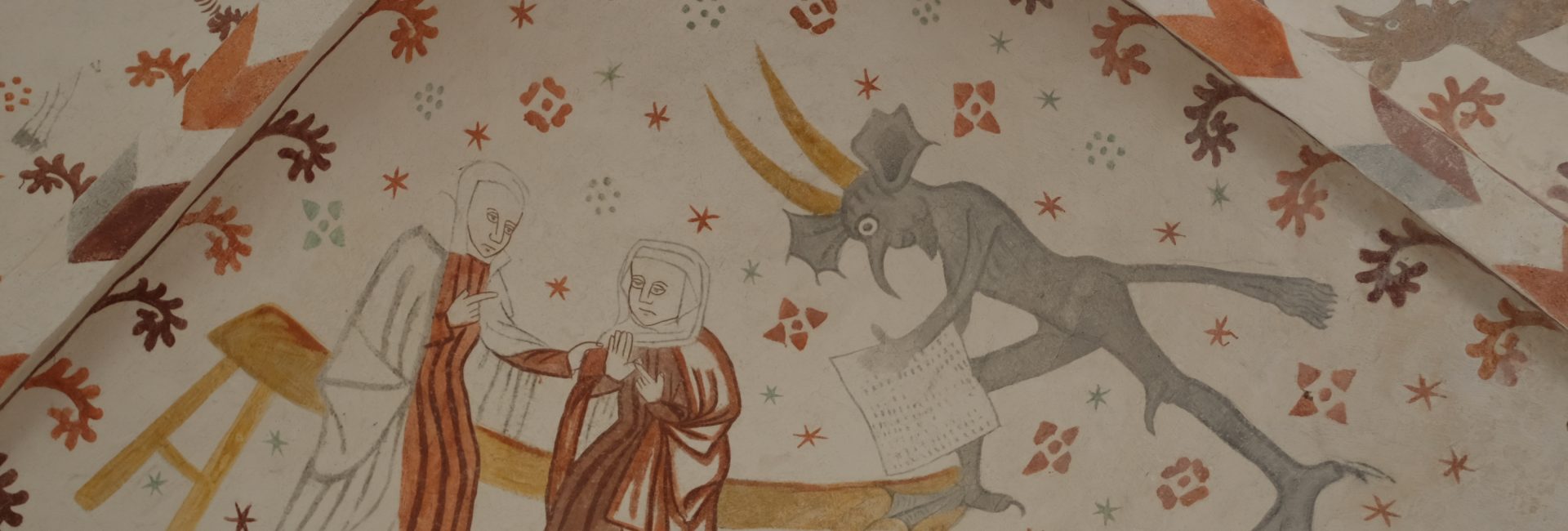
During Halloween last year, I decided to dress to the nines. With the help of a friend, I donned a blue cardigan, a red cape, a few dyed cloth strips, and a pocket-watch-necklace in order to become Marvel’s Doctor Strange. (For those who know me, there was really no better option, and I’m discovering that it’s hard …
On Vulnerability and (Vicarious) Experience
On May 2, 2018, my view of life and my role within it was transformed when I received a phone call from the emergency room at Utah Valley Hospital. My 14-year old daughter had been hit by a car. The distracted driver had failed to notice her in the crosswalk. Though he only clipped her …
Literary Arboretum
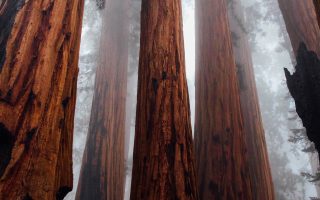
While visiting my longtime friend and former roommate Ella1 at her home in Folsom, California this past summer, her family graciously took me along with them to visit the nearby Muir Woods National Monument. Ella and I were catching a redeye out of San Francisco that night, but had quite a bit of time to …
When Linguistics Meets the Law: An Interdisciplinary Endeavor
Earlier this week, on Constitution Day, BYU Law School issued a press release publicly launching the Law & Corpus Linguistics Technology Platform1. The site will house several large bodies of text compiled to cover the linguistic range of the constitutional record, and is open and available to any user, be it linguist, lawyer, or laymen. …
Border Crossing
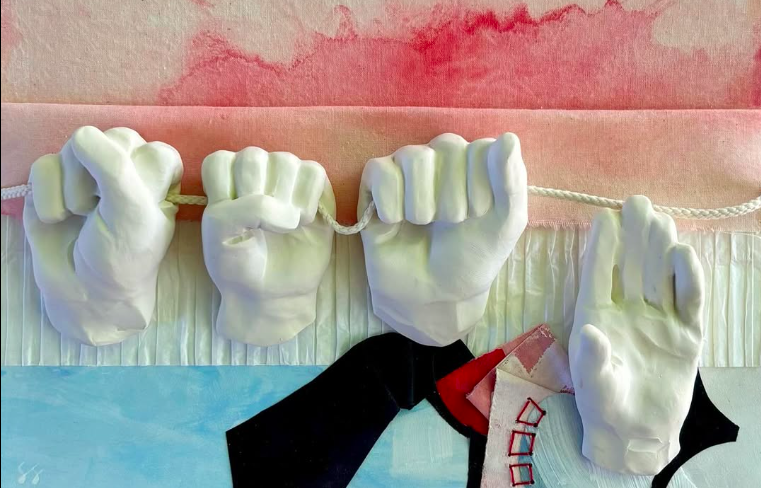
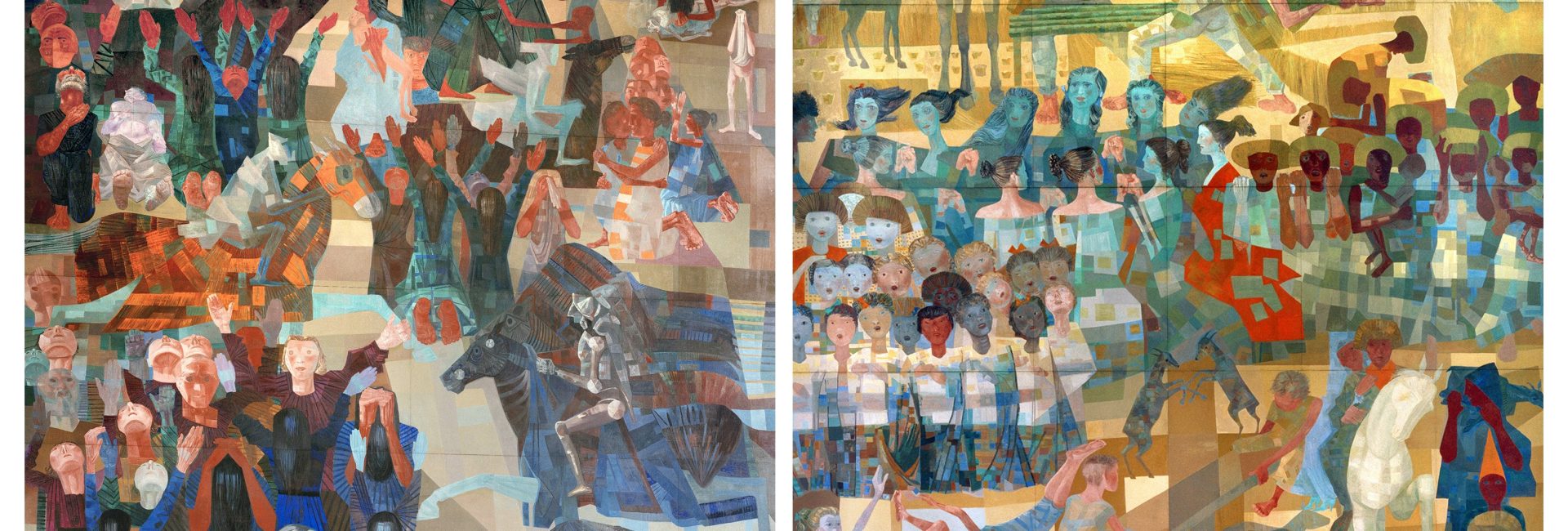
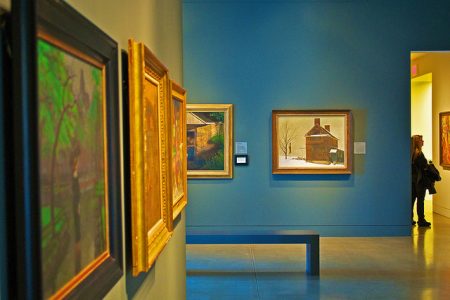
Last week, I was able to experience Rick Shaefer’s Refugee Trilogy, an exhibit at the BYU Museum of Art.1 Three immense triptychs formed the walls of the one-room exhibit, each symbolizing a different form of refugee travel: “Land Crossing,” “Sea Crossing,” and “Border Crossing.” Although all three pieces were moving (especially when considered and felt …
Spiritual Exercises in a Humanistic Register (III): Kevin Hart
This is the third installment of a three-part series on spiritual exercises in humanistic registers. The impetus for this series derives from my interest in the nature, meanings, and forms of spiritual experience in secular as well as religious contexts. As one aspect of that wider interest, I’ve been struck by a particular appeal to …
Spiritual Exercises in a Humanistic Register (II): Denise Levertov
In 1992, the American (immigrant) poet Denise Levertov received a frightening medical report: she had contracted lymphoma. Localized and not—yet—life-threatening, the illness prompted in Levertov a desire for a more vivid spiritual awakening. Having converted to non-denominational Christianity during the mid-1980s, then to Catholicism in 1989, she met with a priest and expressed an interest in …
Spiritual Exercises in a Humanistic Register (I): Pierre Hadot
A few years ago, I became invested in spirituality as a humanistic subject. By “humanistic” I mean a category that pertains to the humanities more than to the history of humanism per se, but also something irreducible to religion or theology, which is where one typically finds attention to spirituality. Or so one used to. …